
How Long Should a Tumble Dryer Last?
For planning, allow roughly 8 to 12 years for a tumble dryer — not as a guarantee, but as a sensible point to reassess reliability, drying performance, safety and repair value.
Dryer type alone does not determine lifespan. Workload, airflow, filter care, repair history, parts availability and whether warning signs are acted on usually tell you more than the label on the front.
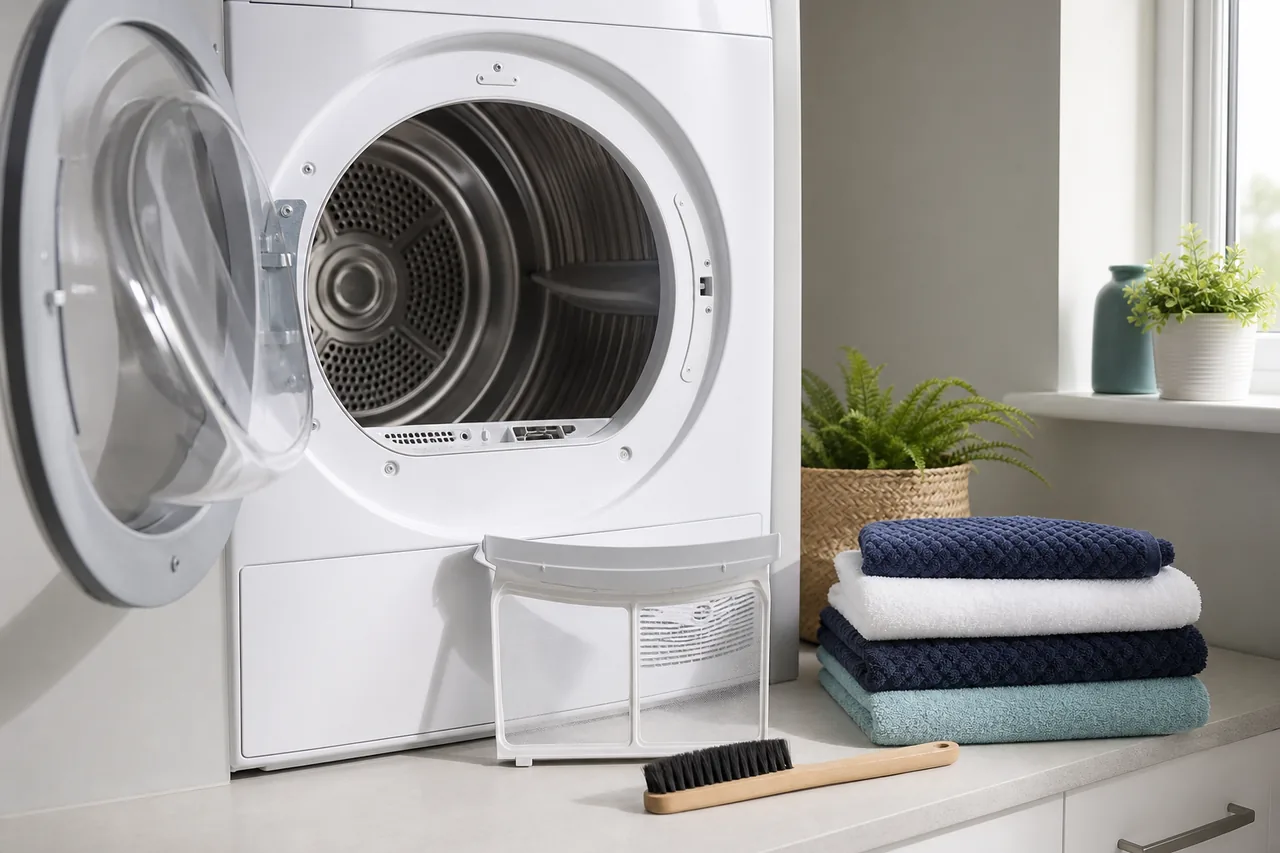
Lifespan is about value, not just age
A tumble dryer can still work but no longer be good value if it is slow, noisy, inefficient or repeatedly failing. If energy use is part of your repair vs replace decision, check the tumble dryer running cost guide. If you are ready to compare replacement options, see best tumble dryers.
How long should a tumble dryer last?
Use roughly 8 to 12 years as a planning range, not a promise. Reassess sooner if drying time rises, unusual noise or odour appears, faults repeat or repair costs stop making sense. Dryer type alone is not a reliable lifespan predictor.
Typical lifespan
Usually around 8–12 years for many UK homes.
What shortens life
Heavy use, poor airflow, overloading and poor maintenance.
What helps
Regular filter cleaning and choosing the right dryer type.
Replace when
Repairs repeat or the dryer no longer offers good value.
Can dryer type predict lifespan?
Not reliably on its own. There is no universal UK lifespan figure that guarantees one dryer type will outlast another. Use 8–12 years as a household planning range, then judge the actual machine by workload, maintenance, repair history, parts support and symptoms.
| Dryer type | What matters most | Practical check |
|---|---|---|
| Vented | Clear ducting and unrestricted airflow | Inspect the hose, external vent and drying time. |
| Condenser | Filter, water tank and condenser care | Check the manual’s cleaning schedule and keep airflow paths clear. |
| Heat pump | Filter and heat-exchanger care, serviceability and parts support | Compare the warranty and likely repair cost, not only energy use. |
What the evidence supports
The planning range is an estimate, not a manufacturer promise. The strongest repeatable advice is maintenance: Bosch recommends cleaning the lint filter after every cycle, while UK fire-safety guidance stresses clear ventilation, no overloading and responding to unusual noise, heat or odour.
Sources checked 27 July 2026: Bosch dryer cleaning guidance · Cornwall Fire and Rescue safety guidance.
A tumble dryer’s lifespan is not just about age
The real question is not only how many years a tumble dryer lasts. It is whether it still makes sense for your home as those years pass.
Two dryers bought at the same time can age very differently. One may still feel like a sensible everyday appliance years later, while another may become noisy, slow, expensive to run or unreliable much earlier.
That usually comes down to three things: how often it is used, how well it is maintained and whether it was the right type of dryer for the household in the first place.
What usually affects tumble dryer lifespan?
A tumble dryer’s useful life is shaped by workload, maintenance, airflow and whether the appliance suits the home.
How often it is used
A dryer used several times a week in a busy household will usually age faster than one used only occasionally.
How well it is maintained
Cleaning the lint filter, keeping airflow clear and looking after the condenser or heat exchanger can make a noticeable difference.
Whether it was the right dryer type
A machine that does not suit the home or usage pattern can feel worn out earlier because it is doing the wrong job.
How demanding the laundry routine is
Heavy bedding, towels, large loads and frequent cycles usually place more strain on the appliance.
Signs your tumble dryer may be near the end
Age alone does not decide everything. These warning signs usually matter more than the number of years.
Clothes take much longer to dry
If normal loads are taking far longer than before, the dryer may be struggling with airflow, sensors, heating or wear.
Repeated faults keep coming back
One repair can be sensible. Repeated faults usually make the repair vs replace decision much harder.
It sounds rough, loud or unstable
New noises, vibration or rough drum movement can suggest the appliance is wearing rather than simply needing a clean.
Running costs feel poor value
An older dryer may still work, but it may no longer make sense if it costs too much to run for your usage.
Simple repair vs replace rule
If the repair is small and the dryer still suits your home, repair may be worth considering. If the dryer is old, inefficient and repeatedly failing, replacement usually becomes easier to justify.
A cheaper dryer can still make sense if…
- Your use is fairly light
- You need a lower upfront spend
- You are buying for shorter-term needs
- You understand long-term value may be weaker
A better-value dryer usually makes more sense if…
- You use the dryer regularly
- You want stronger long-term ownership value
- You want lower running costs over time
- You want a dryer that still feels sensible years later
What usually shortens a tumble dryer’s life?
Overworking the dryer
Buying too small a machine for a heavy-use household can make the dryer work harder than it should.
Poor airflow
Blocked filters, poor venting or a dirty condenser can make drying slower and more stressful for the appliance.
Ignoring early faults
Small issues can become bigger problems if the dryer is kept in use while clearly struggling.
Wrong buying decision
A dryer that does not fit your usage, space, noise needs or budget can feel like a bad appliance earlier than expected.
What usually helps a tumble dryer last longer?
Clean the filter after use
A blocked lint filter makes the dryer work harder and can reduce drying performance.
Do not overload the drum
Heavy, packed loads can reduce airflow and make the dryer work harder than it needs to.
Maintain the condenser or heat exchanger
Condenser and heat pump dryers need regular cleaning in the right places to keep airflow and performance stable.
Choose the right dryer from the start
A dryer that suits your household size, usage and space usually remains a better long-term fit.
Repair or replace: what usually makes more sense?
Repair usually makes sense if…
- The issue is isolated
- The dryer is not very old
- The repair cost is sensible
- The dryer still suits your home well
- Running costs are still reasonable
Replacement usually makes sense if…
- Problems keep repeating
- The appliance is already old
- The dryer feels expensive to run
- It no longer matches your household needs
- You would buy something different today
What lifespan means for different buyers
Budget-first buyer
Lifespan matters, but the lower upfront route can still make sense if usage is lighter and expectations are realistic.
Value-led buyer
A stronger long-term dryer often makes more sense if you expect regular use and want better ownership logic.
Repair vs replace buyer
Lifespan becomes most useful when deciding whether the current dryer is still worth keeping.
Common mistakes buyers make
- Assuming every dryer should last equally well in every household
- Buying the cheapest route for heavy weekly use
- Ignoring running costs when thinking about long-term value
- Repairing repeatedly when the dryer no longer fits the home properly
- Replacing too early without checking whether the issue is small and fixable
Go deeper based on your situation
Once you understand lifespan, use the next guide that matches your repair, replace or running-cost question.
Want to understand running costs?
Use this if energy use is part of your repair vs replace decision.
Choosing between dryer types?
Use this if you are comparing heat pump and condenser dryers.
Need the main shortlist?
Use this if you are ready to compare the best replacement options overall.
Editorial and trust information
BuyDryer is built to help readers make clearer buying decisions, not just browse longer lists. This page is written and reviewed within the site’s editorial system and supported by visible policy and methodology pages.
Editorial standards: How we choose products · Editorial process · Corrections / feedback · Affiliate disclosure
Tumble dryer lifespan questions
How long do tumble dryers usually last?
A tumble dryer usually lasts around 8 to 12 years, although lighter use and good maintenance can help some dryers last longer.
Do heat pump tumble dryers last longer?
A well-maintained heat pump dryer can often last longer than a cheaper basic dryer, but it is also more complex and repairs can cost more.
What shortens tumble dryer lifespan?
Heavy use, poor maintenance, blocked airflow, repeated overloading and ignoring early faults can all shorten useful lifespan.
Is it worth repairing an old tumble dryer?
Sometimes yes, especially if the fault is isolated and the dryer still suits your needs. If problems repeat and the appliance is old or inefficient, replacement often makes more sense.
What should I read after this page?
If you are thinking about replacement, start with the main best tumble dryers guide. If energy use is the concern, check the running costs guide.
Still deciding whether to keep or replace your dryer?
If lifespan, repeated faults and running costs are all starting to point in the wrong direction, the next step is usually comparing better replacement options.